
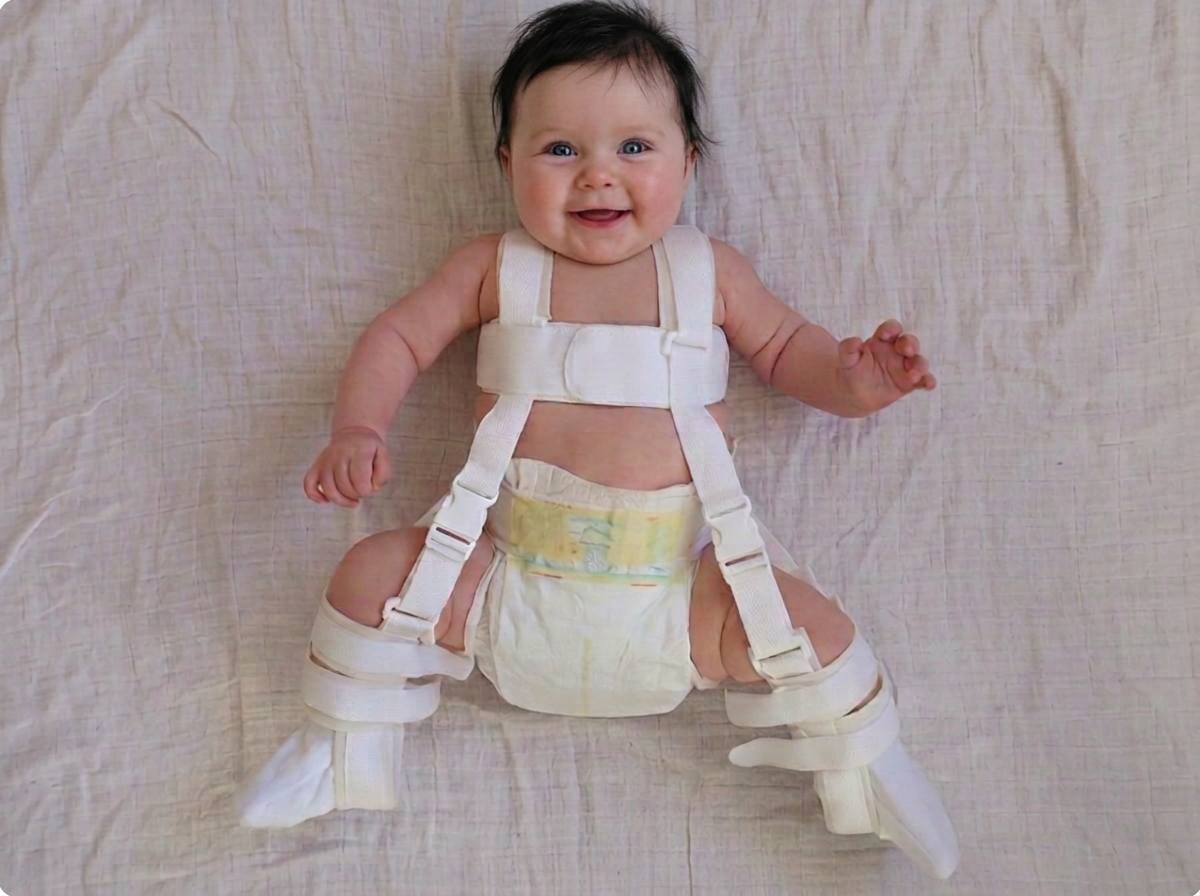
Skin problems are the most common day-to-day complication of harness treatment and almost all of them are preventable. Daily checking takes two minutes and it is the single most useful thing a parent can do.
Where to check every day
- Behind both knees — the most common site of breakdown.
- The groin creases, where moisture collects.
- Under the chest strap, especially at the sides.
- Over both shoulders where the straps cross.
- Around the ankles inside the stirrups, and between the toes.
Normal versus not normal
Pink marks that fade within 15 to 20 minutes of a position change are normal pressure marks. Redness that persists longer, any broken skin, blistering, a raw or weeping patch, or a smell all need clinical attention — same day, not at the next scheduled review.
Prevention
- Keep skin completely dry; moisture plus pressure is what causes breakdown.
- Use a thin cotton vest as a barrier layer under the straps, fitted at the same time as the harness.
- Avoid powders and thick creams inside the harness — they clump under straps and trap moisture.
- Dress lightly in warm weather and use a fan rather than removing the harness.
- Check strap tension after every growth spurt.
If irritation starts
Contact your clinic before making changes. Typical measures are a soft padding sleeve placed by the clinician, a small strap adjustment, or a barrier film for intact but reddened skin. Do not add padding yourself: extra bulk changes hip position, which is the one thing the harness must get right.
Femoral nerve palsy — worth knowing about
In a small number of babies, excessive hip flexion compresses the femoral nerve and the baby stops actively straightening the knee. It is usually reversible when the flexion is reduced promptly. If your baby stops kicking with one leg, treat that as urgent.