
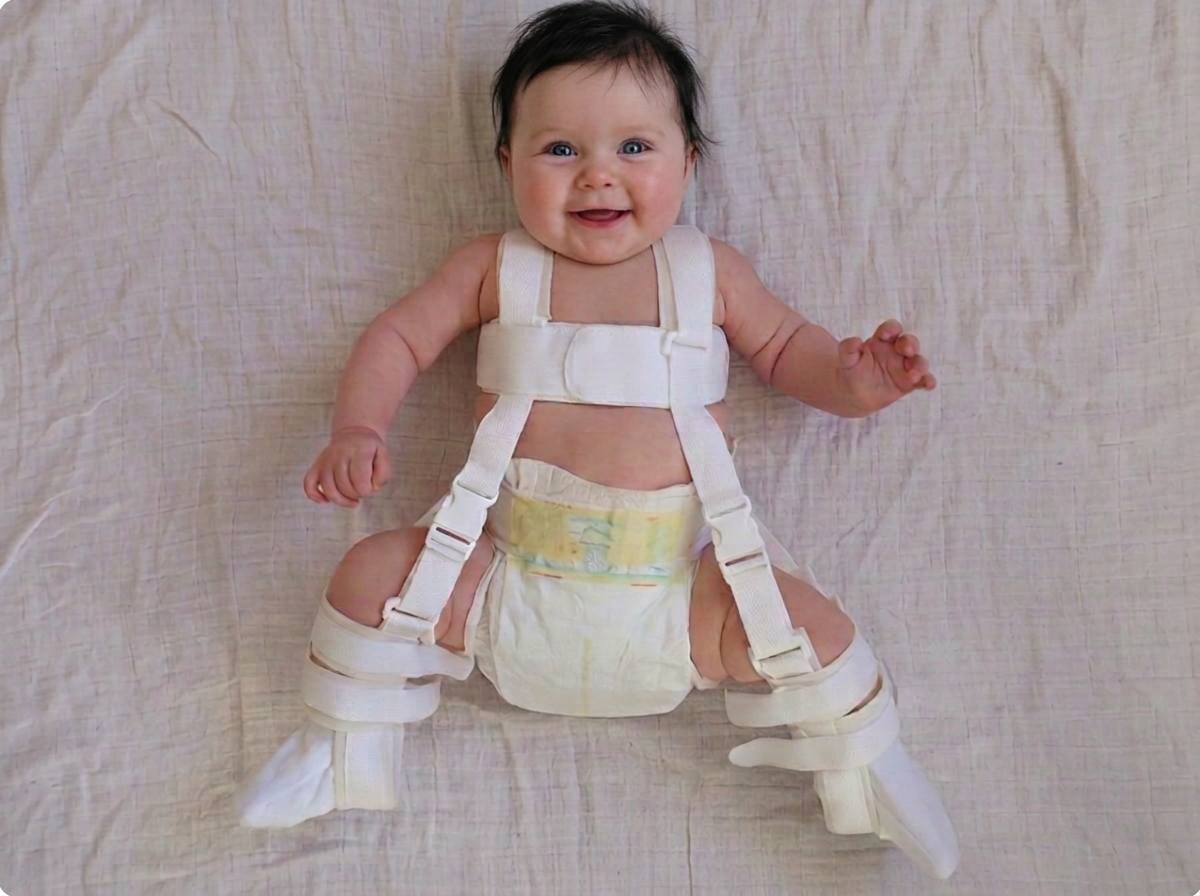
Between five and twenty percent of hips do not reduce in a Pavlik harness. That is not a parenting failure, and in most cases the next treatment works. Knowing the plan in advance makes the news much easier to hear.
Why it happens
- The dislocation is severe and the femoral head cannot enter the socket.
- The baby was older than about six months at the start of treatment.
- Underlying muscle imbalance, neuromuscular conditions or marked ligamentous laxity.
- Bilateral high dislocation.
- Inconsistent wear — the one avoidable cause.
Pavlik harness disease
If a harness keeps an unreduced femoral head pressed against the back edge of the socket for weeks, it can flatten that edge and make later treatment harder. This is why surgeons set a deadline — commonly two to three weeks — for ultrasound to show reduction, and stop the harness if it does not.
Closed reduction and spica casting
Under general anaesthetic the surgeon manipulates the hip into the socket, often releasing the tight adductor tendon, confirms position with imaging, and applies a hip spica cast that holds the position for around six to twelve weeks with one or two cast changes.
An MRI or CT scan after casting confirms the hip is truly reduced inside the plaster.
Open reduction
If closed reduction is not possible, the surgeon opens the joint to remove the soft tissue blocking it. This is more common in older infants and toddlers, and may be combined with a bone procedure on the femur or pelvis in children over about eighteen months.
Talking to your team
- Ask what the ultrasound actually shows and what the target measurement is.
- Ask what the deadline is before the plan changes.
- Ask what recovery from casting looks like at home before the surgery date.