
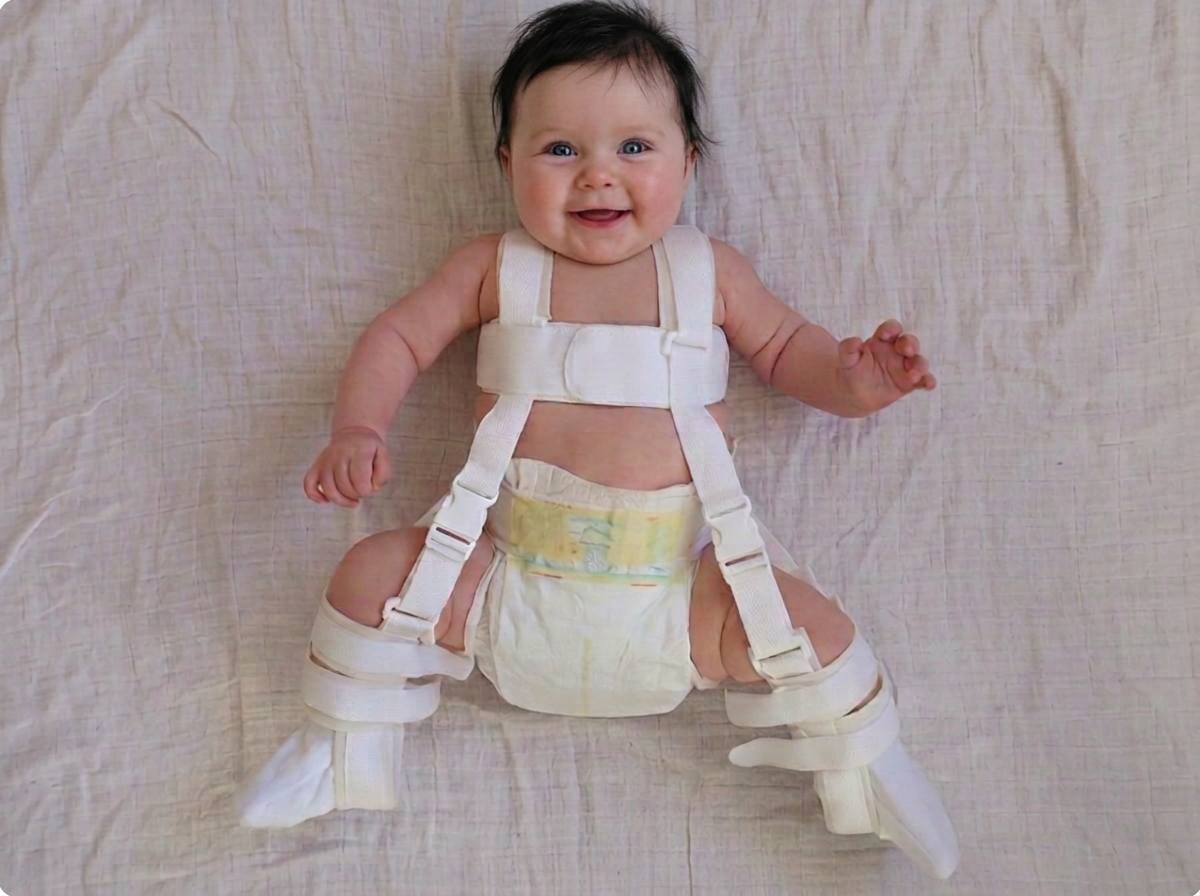
Hip dysplasia is mostly genetic and positional before birth — but the way a baby's legs are held in the first months can genuinely make a shallow socket worse. Tight straight-leg swaddling is the clearest example.
This applies to every baby, and doubly to siblings of a child treated for DDH.
The M-position
A healthy infant hip position looks like an M from the front: hips flexed above the level of the bottom, knees bent, thighs spread and supported to the knee. This is the position the Pavlik harness recreates, and the position a good carrier maintains naturally.
The opposite — legs straight, thighs pressed together, knees hanging unsupported — pushes the femoral head toward the shallow back edge of the socket.
Hip-healthy swaddling
- Wrap the arms and chest snugly if you wish, but leave the legs loose.
- The baby should be able to bend the hips and knees freely and spread the thighs inside the wrap.
- Never wrap the legs straight and bound together — this is the practice linked to higher DDH rates in cultures that use it.
- Sleep sacks with a wide, roomy lower section are a simpler and safer alternative to wrapping.
- Stop swaddling as soon as the baby shows signs of rolling, regardless of hip considerations.
Choosing a carrier
- Look for a wide seat that supports thigh to thigh, knee to knee.
- The baby's knees should sit higher than the bottom.
- Stretchy wraps and ring slings naturally give the M-position.
- Avoid narrow-based carriers where the baby hangs by the crotch with legs dangling straight.
- Facing-out carriers usually force the legs straight — use them sparingly or not at all in the first months.
Devices to limit
Narrow-seat bouncers, jumpers and walkers that hold the legs together and bear weight through straight hips are best used briefly or avoided in the first year, particularly for babies with any hip history. Car seats are necessary and safe; long periods sleeping in one outside the car are not ideal for hips or for breathing.
If your baby is in a harness
The harness already holds the correct position, so the rule is simply not to fight it: no swaddling over the harness legs, no narrow carriers, and no attempts to straighten the legs for photographs or clothing.
Frequently asked questions
Can swaddling cause hip dysplasia?
Tight swaddling with the legs held straight and pressed together is associated with a higher rate of hip dysplasia. Swaddling that leaves the hips and knees free to bend and spread is considered hip-safe.
Which baby carriers are hip-healthy?
Any carrier that supports the thighs from knee to knee and keeps the knees higher than the bottom. Stretchy wraps, ring slings and wide-seat structured carriers all do this.
Should siblings of a treated baby be screened?
Yes — a first-degree family history is a recognised risk factor, and most guidelines recommend a hip ultrasound for siblings.