
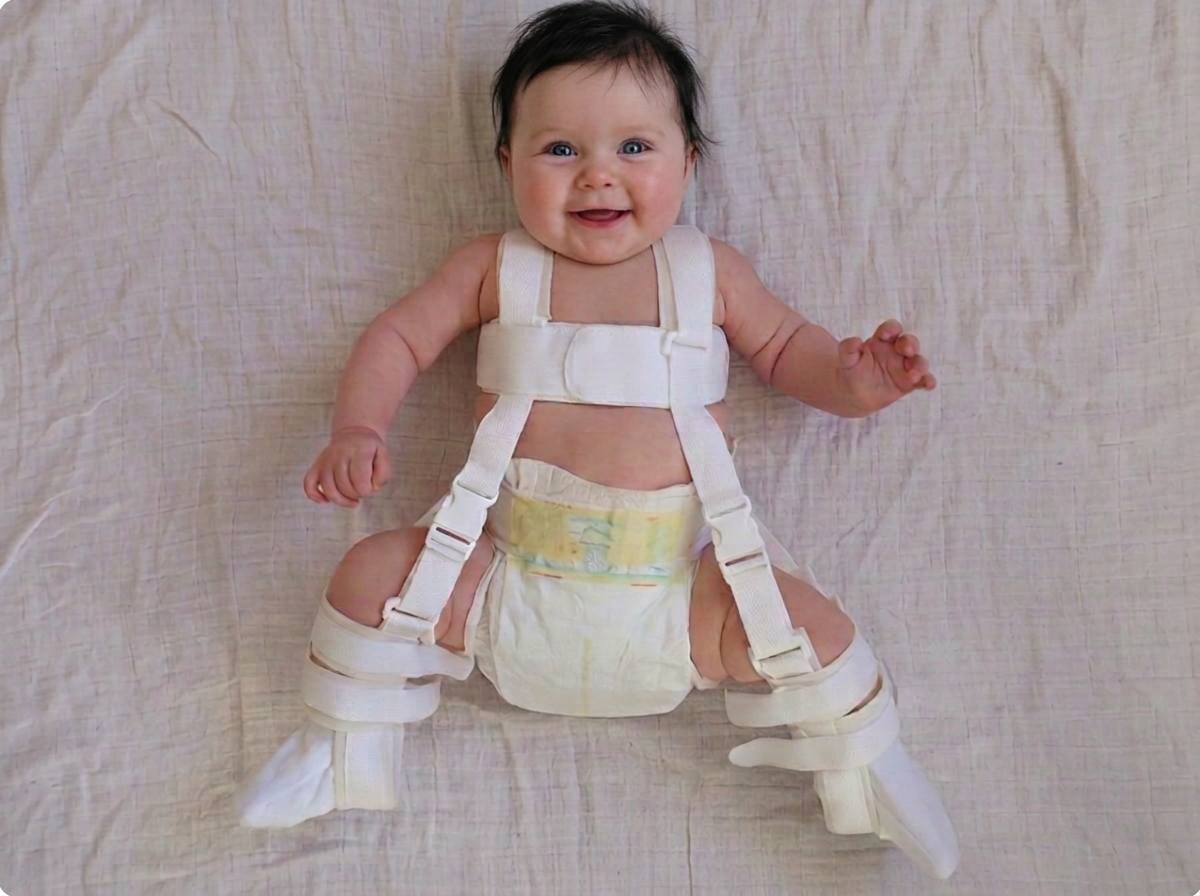
A Pavlik harness sits against a baby's skin for weeks, absorbs milk, sweat and the occasional nappy leak, and cannot simply be thrown in a hot wash whenever you like. Cleaning it well is part of keeping the skin healthy — and keeping the straps at the settings your clinician chose.
The rules depend entirely on one thing: whether your surgeon has authorised removal.
If removal is not yet permitted
- Spot-clean only. Dampen a cloth with warm water and a drop of mild, fragrance-free soap.
- Dab the soiled area, then wipe with a clean damp cloth to lift the soap.
- Pat dry thoroughly with a towel; finish with a cool hairdryer held well away if needed.
- Never soak the webbing while it is on the baby, and never loosen a strap to reach a stain.
- For heavy soiling, call the clinic — they can swap in a second harness.
If your clinic has authorised removal
Photograph the strap positions and note the markings before removing anything. Many clinics mark the webbing with a permanent pen for exactly this reason. Remove, wash, and refit within the short window you were given — typically the length of one bath.
Have a second person hold the baby's legs in the abducted position while the harness is off, unless your clinic told you the baby may move freely.
Washing method
- Hand wash in lukewarm water (about 30 °C) with a mild, non-biological detergent.
- Machine wash only if your supplier confirms it: delicate cycle, 30 °C, inside a mesh laundry bag with the straps fastened so they do not tangle.
- Do not use bleach, fabric softener, stain remover sprays or antibacterial laundry additives — they leave residue that irritates infant skin and stiffens webbing.
- Rinse twice. Residual detergent is a common cause of rash under straps.
Drying
Air dry flat, away from direct heat and sunlight. Never tumble dry, never put a harness on a radiator, and never iron it. Heat shrinks and hardens the webbing and can change the effective strap length, which changes the hip position.
A harness normally takes several hours to dry, which is why a second harness is far more practical than trying to wash and refit the same one.
Smell, staining and wear
Yellowing and softening are normal with weeks of wear and do not affect function. A persistent bad smell, however, is worth mentioning — it can indicate skin breakdown underneath rather than a dirty harness. Fraying webbing, a slipping buckle, or a stirrup that no longer holds should be reported and the harness replaced.
Frequently asked questions
Can I put a Pavlik harness in the washing machine?
Only if your supplier confirms it is machine-safe, and only on a 30 °C delicate cycle inside a mesh bag. Hand washing is safer.
How often should I wash it?
Only when it needs it and only when removal is permitted. Between washes, spot-clean. Many families keep two harnesses so one is always dry.
Can I use fabric softener or bleach?
No. Both leave residues that irritate infant skin, and bleach weakens the webbing.