
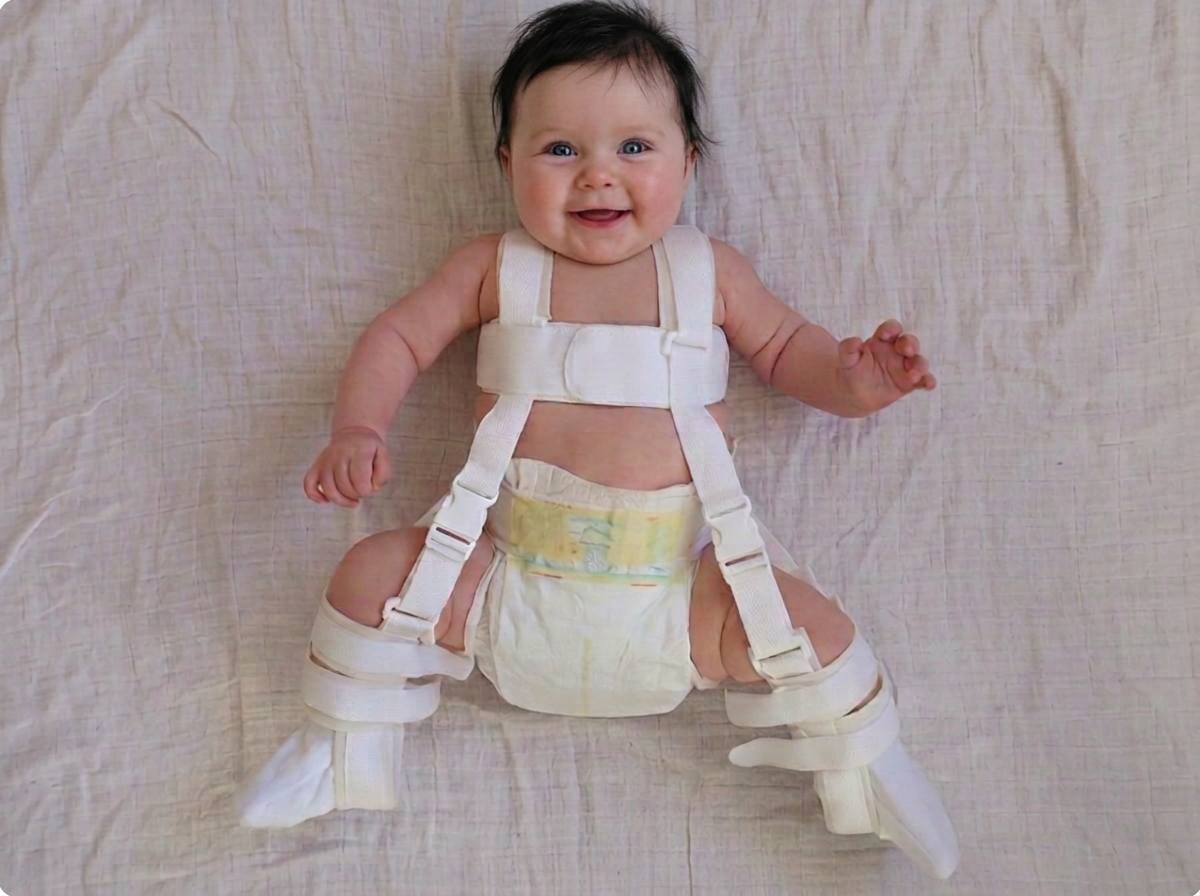
The harness is worn through the night — that is when a large share of the total wear hours accumulate. Parents worry about safety and about sleep quality, and both concerns are manageable.
Safe sleep rules do not change because of the harness. They matter more, if anything.
Safe sleep rules still apply
- Always on the back, for every sleep including naps.
- Firm, flat mattress with a fitted sheet and nothing else in the cot.
- No pillows, positioners, wedges, bumpers or loose blankets — including anything sold to 'support' a harness.
- Room-share for the first six months; the baby sleeps in their own cot or crib.
- Keep the room comfortably cool — harness babies overheat more easily.
The first three nights
Expect disturbed sleep at first. The baby cannot straighten the legs or find their usual position, and settling takes longer. Extra daytime contact, a predictable bedtime sequence, and feeding just before sleep all help. Almost all families report normal sleep returning within a week.
Do not remove the harness to help the baby sleep. Removed hours are the single most common reason harness treatment fails.
Practical setup
- A large sleep sack that drapes over the spread legs, rather than one with fitted legs.
- One thin cotton layer under the harness against the skin.
- Cotton socks under the stirrups to prevent rubbing.
- Check nappy and skin at night feeds — moisture at night is the main skin risk.
- Keep the room cool rather than adding blankets over the harness.
Rolling and older babies
Babies in a harness roll later than usual, but if your baby manages to roll, follow the standard advice: keep placing them on the back to sleep and let them find their own position once they can roll both ways. Tell your clinic if rolling starts — they may want to check strap tension.
The weaning phase
Weaning is usually the reverse of what parents expect: the harness comes off during the day first and stays on for nights and naps. Night wear is the last thing to stop, because the socket benefits from long uninterrupted hours in position. Follow your surgeon's schedule exactly — pulling ahead of it risks losing hard-won correction.
Frequently asked questions
Can my baby sleep on their side or tummy in the harness?
No. Back sleeping remains the rule for every sleep. The harness does not change safe-sleep guidance.
Can I take the harness off at night so my baby sleeps better?
No, unless your surgeon has moved you to a part-time schedule. Night hours are a large part of the treatment.
Do babies sleep worse in a Pavlik harness?
For the first few nights, often yes. Most babies adapt within a week and sleep normally for the rest of treatment.