
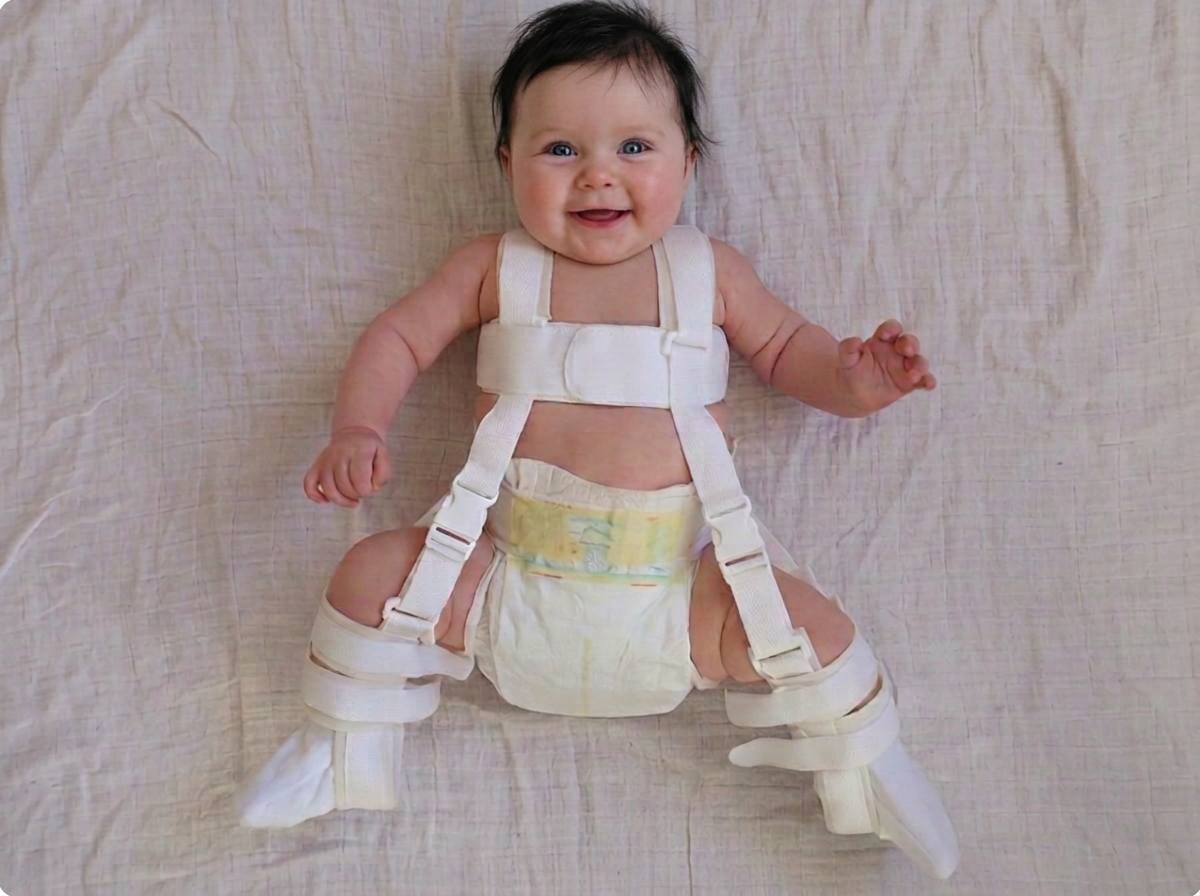
Safe sleep rules do not change because of the harness. Babies in a Pavlik harness sleep on their back, on a firm flat mattress, with nothing loose in the cot. The harness itself is designed to be slept in.
Position
Back sleeping remains the standard. The harness holds the hips in flexion, which some babies find settles them; others take a few nights to adapt. Do not prop the baby on their side with rolls or wedges to 'help' — that introduces a suffocation risk without any hip benefit.
Swaddling and sleeping bags
- Never swaddle the legs. Straight-leg swaddling is itself a cause of hip dysplasia and directly opposes the treatment.
- Arms-only swaddles are fine if the fabric does not press on the chest strap.
- Choose a hip-healthy sleeping bag one size up so it fits over the harness without compressing the legs together.
The first few nights
Expect two to three unsettled nights. Extra contact during the day, a predictable bedtime routine and feeding in a slightly more upright hold all help. Most families report their baby sleeps normally within a week.
What is not normal: inconsolable crying, arching away from the harness at every touch, or a baby who stops moving one leg. Contact your clinic the same day.
Cot setup
- Firm, flat mattress; no pillows, bumpers or loose bedding.
- Room temperature 16–20 °C. The harness adds a layer, so dress lightly underneath.
- Check the chest strap position each time you settle the baby down.