
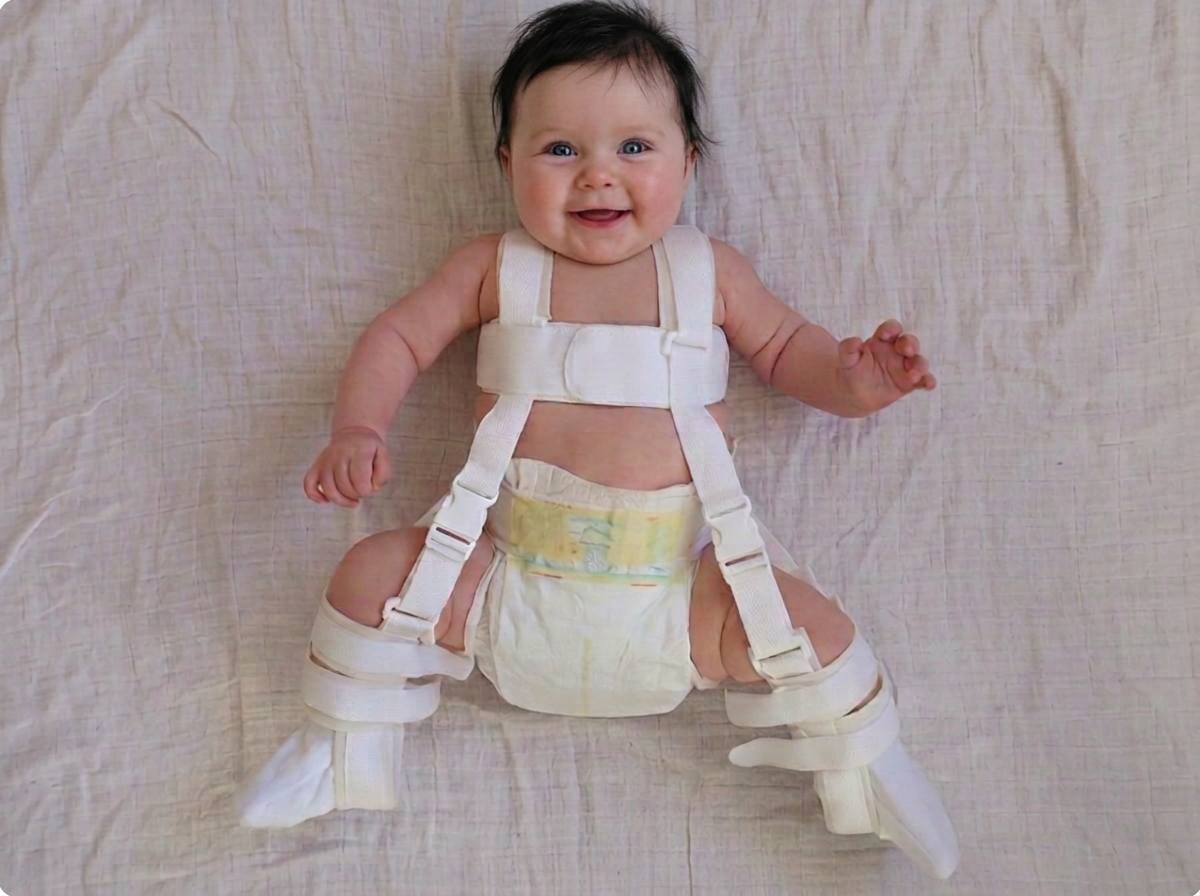
If your baby was breech in the third trimester, hip screening is not optional extra caution — it is standard of care in every major guideline.
This guide explains why, and what the screening pathway should look like.
Why breech position matters
In frank breech the baby sits with hips flexed and knees extended for weeks. That posture stretches the hamstrings and pulls the femoral head toward the back edge of the socket, exactly the direction dysplasia develops. The tighter the space — first pregnancy, low fluid, twins — the stronger the effect.
Breech babies carry several times the background risk of DDH. Estimates vary, but roughly 1 in 15 to 1 in 35 breech girls will have hip dysplasia needing treatment.
Who is highest risk
- Frank breech (bottom down, legs extended upward) — the highest-risk position.
- Breech in the third trimester, even if the baby turned or was delivered by caesarean.
- Breech plus female sex — the two risk factors compound.
- Breech plus a family history of hip dysplasia.
- Breech with oligohydramnios or a twin pregnancy.
The screening pathway
A newborn hip examination happens before discharge and again at the six-to-eight week check. For breech babies, guidelines add an ultrasound at around six weeks of age — early enough to treat simply, late enough that normal newborn laxity has settled and the scan is not falsely abnormal.
If the examination is abnormal at any point, imaging should happen sooner rather than waiting for the six-week slot.
What to ask for
- Confirm in writing that a hip ultrasound has been booked, with a date.
- Ask who will review the result and how you will be told.
- If the scan is 'immature', ask when the repeat scan is and make sure it is booked before you leave.
- If nothing has been arranged by four weeks of age, contact your health visitor, GP or paediatrician directly.
Caesarean does not remove the risk
The damage is positional and happens in the womb, not during delivery. A breech baby delivered by planned caesarean carries the same elevated risk and needs the same screening.
Frequently asked questions
Does every breech baby need a hip ultrasound?
Major guidelines recommend imaging for babies who were breech in the third trimester, typically an ultrasound at around six weeks of age, regardless of how they were delivered.
My breech baby's newborn hip exam was normal — is that enough?
No. A shallow socket can feel completely normal on examination. The ultrasound is what detects it.
When is the best time for the scan?
Around six weeks of age for routine risk-factor screening. Earlier if the examination is abnormal.