
"They heard a click in her hip" is how many DDH journeys begin. Most clicks turn out to be nothing. A clunk is a different matter.
Here is how clinicians tell them apart, and what happens next.
Click versus clunk
A click is a high-pitched, short sound, usually caused by ligaments or tendons moving over bone. Isolated clicks in an otherwise normal examination are common and usually harmless.
A clunk is a lower, deeper sensation felt more than heard — the femoral head actually moving in or out of the socket. A clunk is always investigated.
What the newborn hip tests check
- Ortolani — the examiner gently abducts the hip to see whether a dislocated head slides back into the socket (a positive 'clunk of reduction').
- Barlow — gentle backward pressure to see whether a located head can be pushed out (a positive 'clunk of dislocation').
- Galeazzi — knee heights compared with hips and knees bent; a lower knee suggests a shortened, dislocated side.
- Abduction range — limited spreading on one side is one of the most reliable signs after the newborn period.
- Skin creases — asymmetric thigh or buttock creases prompt a closer look, though they occur in normal babies too.
When an ultrasound is arranged
- Any positive Ortolani or Barlow test.
- A true clunk on examination at any age.
- Breech presentation in the third trimester, even with a normal examination.
- A parent or sibling treated for hip dysplasia.
- Limited abduction, leg length difference, or persistent asymmetry.
Why examination alone is not enough
The Ortolani and Barlow tests detect unstable hips, but a shallow socket that is not currently unstable can feel completely normal. This is why risk-factor screening with ultrasound exists: a normal examination does not exclude dysplasia, and roughly one in ten treated hips had no abnormal finding on the newborn check.
What happens if the scan is abnormal
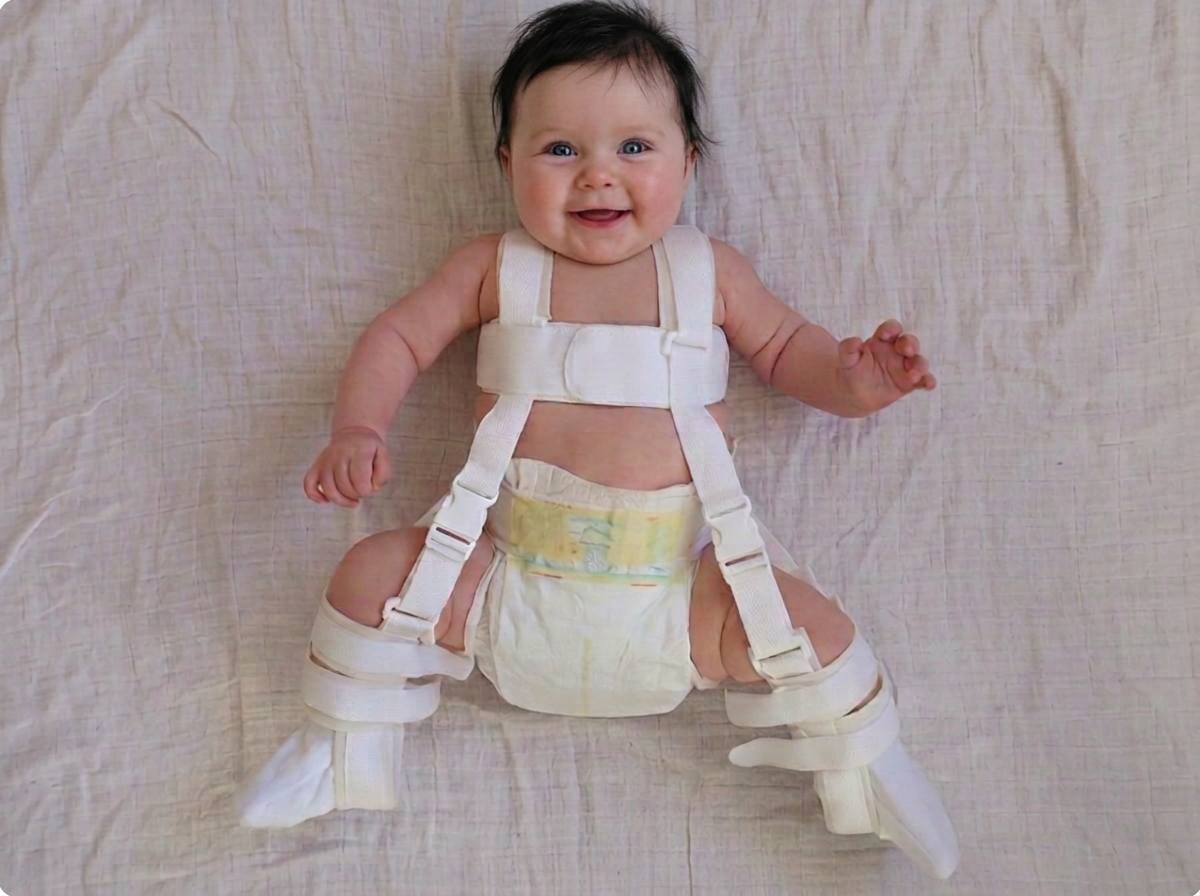
Mild immaturity is often re-scanned in four to six weeks and resolves without treatment. Confirmed dysplasia in a baby under six months is normally treated with a Pavlik harness, worn full-time and confirmed with follow-up imaging.
Frequently asked questions
Is a clicky hip in a newborn serious?
Usually not. An isolated click with an otherwise normal examination is common and often harmless, but it should still be documented and, if there are risk factors, scanned.
What is the difference between a click and a clunk?
A click is a short high-pitched sound from soft tissue. A clunk is a deep sensation of the hip joint actually moving in or out of the socket, and it always needs investigation.
My baby was breech but the hip exam was normal — do we still need a scan?
Yes. Breech position is the strongest risk factor for DDH, and a normal examination does not rule out a shallow socket. Guidelines recommend imaging for breech babies.