
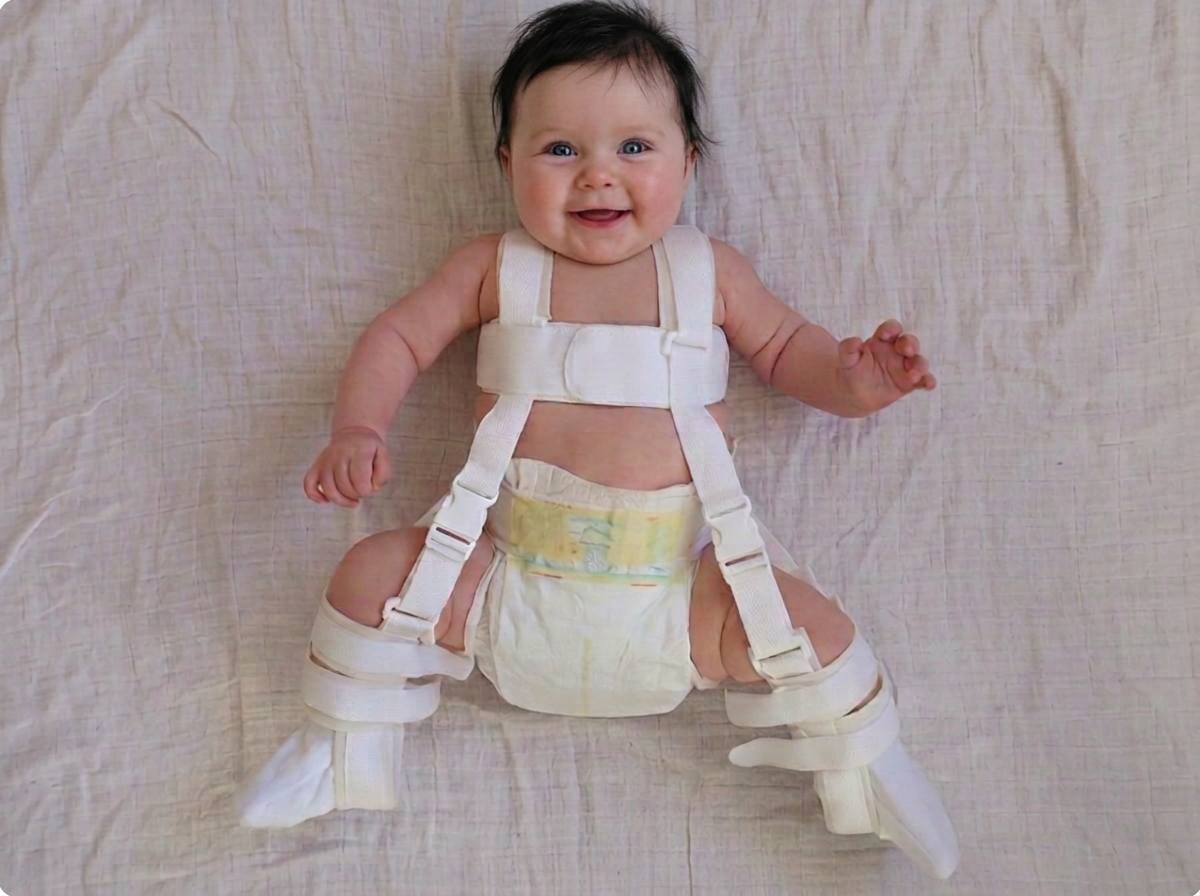
Twins are at higher risk of hip dysplasia because the womb is crowded, and premature babies are screened on a different timetable because of size and corrected age.
Both situations are common and both are treated successfully with a harness. Here is what changes.
Why twins are higher risk
Space. In a twin or triplet pregnancy the later weeks leave much less room, and constrained positioning — particularly breech, which is far more common in multiples — is the mechanism that produces dysplasia. Screening ultrasound is therefore recommended for multiples in most units, especially where either baby was breech.
Premature babies: timing
Screening and treatment decisions use corrected age, not birth age. A baby born at 30 weeks is scanned on the schedule of a term baby six to ten weeks later, because the hip of a very preterm infant is normally immature and an early scan produces false alarms.
Fitting is usually delayed until the baby is medically stable and weighs enough for the smallest harness to hold position — often around 2.5 to 3 kg, though units differ.
Fitting and skin in small babies
- Preterm skin is thinner and more fragile; check under every strap at least twice a day.
- Use the smallest size and be alert for a chest strap sitting too high against the ribs.
- Monitor breathing and feeding closely in the first days of wear.
- Line the straps with thin cotton, never with padding thick enough to change strap tension.
- Expect more frequent clinic reviews than for a term baby.
Managing two babies in harnesses
- Photograph each baby's strap settings separately and label the photos — the harnesses are not interchangeable.
- Mark each harness discreetly with the baby's initial.
- Feed one at a time with hip support rather than tandem feeding in the early weeks.
- Expect double the laundry: ask for a spare harness for each baby.
- Ask whether appointments can be scheduled back to back to halve the travel.
Outcomes
Prematurity and twin birth do not worsen the outlook once treatment starts. Success rates for reducible hips treated in the first months are the same as for singleton term babies — around 85-95 percent avoid surgery.
Frequently asked questions
Are twins more likely to have hip dysplasia?
Yes. Crowding and the higher rate of breech presentation in multiples both raise the risk, so screening ultrasound is usually recommended.
Can a premature baby wear a Pavlik harness?
Yes, once medically stable and large enough for the smallest size to hold position. Screening and treatment timing use corrected age.
Do both twins need treatment if one is affected?
Not necessarily — each baby is assessed individually — but both should be scanned.